Ottawa, July 27, 2026 – Far from resolving concerns over the future of two Saskatchewan research farms, a newly signed Memorandum of Understanding (MOU) between the federal and provincial governments has only deepened uncertainty for workers, producers, and the agricultural research community. The Indian Head and Scott Research Farms were two of the seven federal agricultural research facilities slated for closure earlier this year following the Carney government’s cuts to Agriculture and Agri-Food Canada (AAFC). The Agriculture Union represents 32 workers at Indian Head and Scott who are all facing job losses because of these cuts. The closures themselves have been widely rebuked by farming groups, the cattle industry, labour unions, and scientists.
The MOU, signed between Canadian Agriculture Minister Heath MacDonald and his Saskatchewan counterpart David Marit, will see the Indian Head and Scott farms will continue to be productive assets. While both are framing it as a step towards keeping the farms open, the MOU does little to change the current situation.
All 32 Agriculture Union members at these farms are still being told they will lose their jobs. As per a memo sent to employees sent on July 20th, “AAFC is continuing the required disposal process at Scott and Indian Head. The agreement allows AAFC and the province of Saskatchewan to explore temporary arrangements that support agricultural activities while that process moves forward. The MOU does not affect workforce adjustment decisions and AAFC will continue with the planned relocation and wind-down of research activities at Scott and Indian Head that are already underway.”
These members work as grounds and machinery maintenance crews, research technicians, field workers and administrators. Agricultural research takes continuity, long-term data collection and analysis. Neither the Canadian nor Saskatchewan governments have demonstrated how Indian Head and Scott will continue to operate as research farms with all their researchers being shown the door. Minister MacDonald may try to paint it otherwise, but the Canadian government is still drastically reducing its agricultural research capacity.
Unanimous Government Report Shuns Cuts to Science
The seven research centre and farm closures were the subject of a study at the Parliamentary Standing Committee on Agriculture and Agri-Food in the winter of 2026. The unanimous findings of that study, released in May, recommended that the federal government “pause and reverse the decision to close agricultural research centres and experimental farm sites” and to “better understand the scientific and economic impact of the proposed closures”. It also recommended that the “Government of Canada explore other expenditure reductions that do not impact front-line scientists to meet its Comprehensive Expenditure Review commitments”.
The Agriculture Union is profoundly dismayed that the Canadian government has not only turned their backs on this science, but also turned their backs on this unanimous report. We also share the preoccupation raised by the National Farmers Union regarding the uncertain future of the Seed Increase Unit (SIU) housed at Indian Head. As the NFU has pointed out, “Canada’s multi-billion-dollar commodity grain sector depends on farmers having reliable access to high quality pedigreed seed every year. The SIU is a critical element of the pipeline that makes that possible.” The MOU between Ottawa and Regina is non-binding and there has been no public announcement to indicate the continued operation of the SIU at Indian Head Research Farm beyond 2026.
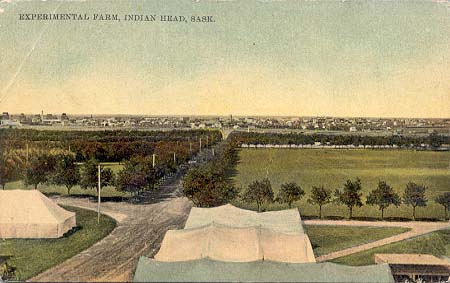
The loss of shutting down Indian Head and Scott as research farms is incalculable. Farmers across the country, and particularly in the Prairies, have relied on the unique research focuses of these farms for more than a century. For example, Indian Head has been instrumental in documenting and promoting the positive effects of no-till farming, a technique designed to improve overall soil health, reduce erosion and save on fuel and labour costs. Scott is unique because it is one of the few farms located in the dark brown soil zone of the Prairies (cooler, wetter, and better fertility). Its studies on different cropping systems, including organic production, that use different rotations and different input regimes, have been fundamental to Saskatchewan’s economy.
The Agriculture Union maintains that these farms must be protected as federal public research institutions. In an age of climate insecurity, food inflation and economic unpredictability, we simply can’t afford to abandon these pillars of Canada’s food security and sovereignty. An MOU to keep a productive asset is not enough. It is simply window dressing to cover a loss to the agriculture community. We call on the federal government to heed the recommendations of its own report and commit to keeping these research farms operational.
For media enquiries, contact: Aaron Lakoff, Communications Officer for the Agriculture Union – LakoffA@psac-afpc.com.